
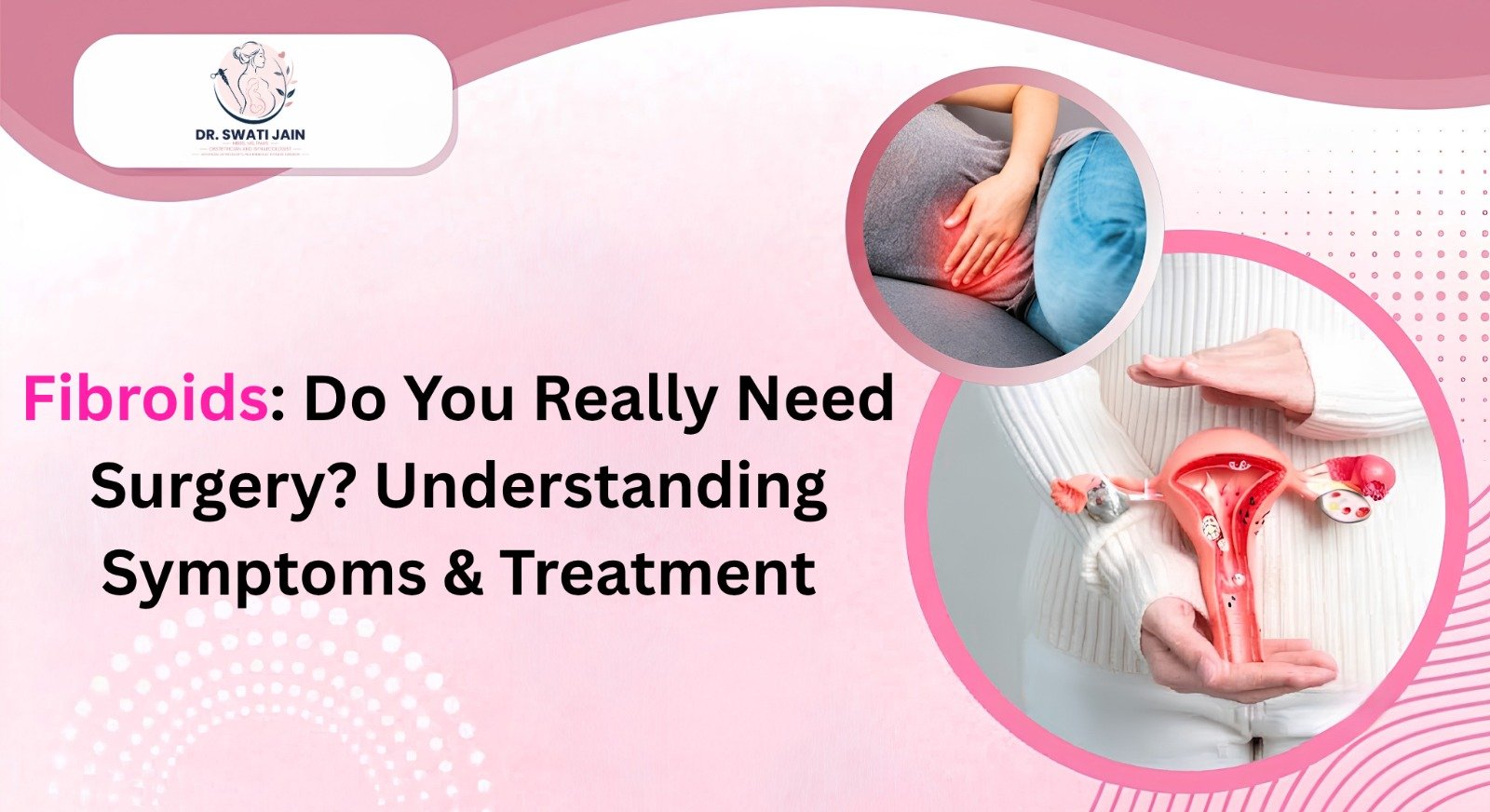
Fibroids: Do You Really Need Surgery? Understanding Symptoms & Treatment
Hearing the word “fibroid” on an ultrasound report can be worrying. The next question that often comes right away is, "Will I need surgery?”
The good news is that not every fibroid needs surgery. Fibroids are common, non-cancerous growths that develop in or around the uterus. Many women have fibroids without experiencing any symptoms at all.
Whether treatment is needed depends on several factors, including the size, number, and location of the fibroids, your symptoms, age, overall health, and whether you plan to become pregnant in the future.
For women dealing with heavy periods, pelvic pressure, pain or fertility concerns, getting the right evaluation is important. A fibroid may need treatment, but that does not mean major surgery is always the only option.
What Are Uterine Fibroids?
Uterine fibroids are non-cancerous growths that form in or around the uterus. They are also known as leiomyomas or myomas.
Think of the uterus as a room. A fibroid is like a lump that can grow within the wall, toward the inside space, or on the outside surface of that room.
Fibroids can vary greatly in size and number. Some are very small and may never cause any trouble. Others can grow large enough to put pressure on nearby organs, such as the bladder or bowel.
What Are the Common Types of Fibroids?
Fibroids are generally classified according to where they develop:
Intramural fibroids: These grow within the muscular wall of the uterus.
Submucosal fibroids: These grow toward the inside of the uterine cavity and are often associated with heavy menstrual bleeding.
Subserosal fibroids: These grow outward from the uterus and may cause pressure on nearby organs such as the bladder or bowel.
The location of a fibroid can be just as important as its size. A small fibroid in a sensitive location may cause more symptoms than a larger fibroid in an area that does not affect surrounding organs.
What Symptoms Can Fibroids Cause?
Some women with fibroids have no symptoms at all. Others may experience symptoms that affect their daily lives.
Common fibroid symptoms include:
Heavy or prolonged menstrual bleeding
Painful periods or severe cramps
Pelvic pain or pressure
Lower back pain
Frequent urination
Constipation or bloating
Pain or discomfort during sex
A swollen or enlarged abdomen
Difficulty becoming pregnant in some cases
Heavy menstrual bleeding can also contribute to iron-deficiency anemia. This may cause symptoms such as tiredness, weakness, dizziness, or shortness of breath.
Why Does the Location of a Fibroid Matter?
The location of a fibroid can determine which parts of the uterus or nearby organs are affected.
For example, a fibroid pressing against the bladder may cause frequent urination. A fibroid growing into the uterine cavity may contribute to heavy menstrual bleeding.
That is why knowing only that you have a “5 cm fibroid” is not enough to decide whether treatment is necessary.
Your doctor will also consider:
How many fibroids are present
Whether the fibroid is growing
What symptoms you are experiencing
Your age and overall health
Your future pregnancy plans
Does Every Fibroid Need Surgery?
No. Many fibroids do not require surgery.
If a fibroid is not causing symptoms and there are no other health concerns, your gynecologist may recommend monitoring it instead of treating it immediately.
This approach is sometimes called watchful waiting or expectant management. It does not mean ignoring the fibroid. Instead, your doctor monitors your symptoms and may recommend follow-up examinations or imaging when necessary.
When Might Fibroid Treatment Become Necessary?
Treatment may be considered when:
Heavy bleeding is affecting your daily life
Anemia develops because of blood loss
Pelvic pain or pressure becomes difficult to manage
A fibroid causes bladder or bowel problems
Fibroids may be contributing to fertility concerns
Symptoms continue despite medication
Fibroids are large or continue to cause significant problems
The decision should be based on the complete clinical picture, rather than the size of the fibroid alone.
How Are Fibroids Diagnosed?
An ultrasound is commonly used to identify and map fibroids. It can help your doctor determine how many fibroids are present, where they are located, and how large they are.
Depending on your symptoms and the complexity of your condition, your doctor may also recommend additional imaging, such as an MRI.
A proper evaluation is important because heavy menstrual bleeding, pelvic pain, and other symptoms can have causes besides fibroids.
The goal is not simply to find a fibroid. It is to understand whether the fibroid is actually responsible for your symptoms and whether treatment is necessary.
What Are the Treatment Options for Fibroids?
There is no single treatment that is right for every woman. Treatment can range from monitoring and medication to minimally invasive procedures or surgery.
1. Monitoring
If your symptoms are mild or you have no symptoms, your doctor may recommend monitoring the fibroid.
This can be appropriate when the fibroid is not causing significant problems and there is no immediate need for treatment.
2. Medicines
Certain medicines can help manage symptoms such as heavy bleeding and pelvic pain.
Some hormonal medicines may help control bleeding, while other treatments may temporarily reduce fibroid size or symptoms.
However, medicines generally do not permanently remove fibroids. Your treatment plan should therefore take into account both your current symptoms and your long-term goals.
3. Minimally Invasive Procedures
For some patients, procedures such as uterine artery embolization or radiofrequency ablation may be considered.
These treatments aim to reduce fibroid size or improve symptoms without removing the uterus.
However, suitability depends on several factors, including the size, location and number of fibroids, as well as your future pregnancy plans.
4. Myomectomy
A myomectomy is a procedure that removes fibroids while keeping the uterus intact.
Depending on the size and location of the fibroids, a myomectomy may be performed using different approaches. Some fibroids inside the uterine cavity can be treated through the cervix, while others may require laparoscopic or open abdominal surgery.
For women who want to have children in the future, discussing fertility goals with a gynaecologist before choosing a treatment is especially important.
5. Hysterectomy
A hysterectomy involves removing the uterus. It is a definitive treatment for uterine fibroids because fibroids cannot grow in a uterus that has been removed.
It may be considered in some cases, particularly when symptoms are severe or other treatment options have not provided adequate relief.
Because the uterus is removed, hysterectomy is not an option for women who wish to carry a future pregnancy.
The most appropriate procedure depends on your individual situation, symptoms, health, and reproductive goals.
Meet the Expert: Dr. Swati Jain
Dr. Swati Jain is a gynaecologist and laparoscopic surgeon at Aakash Healthcare Super Speciality Hospital, Dwarka.
Her work focuses on obstetrics and gynaecology, including surgical care.
For women with fibroids, the focus should be on understanding the symptoms, identifying the location and characteristics of the fibroids, and discussing treatment options according to individual needs.
During a consultation, you can ask important questions such as:
Can my symptoms be managed without surgery?
If surgery is needed, which procedure may be suitable for me?
Will my fertility plans affect the treatment choice?
What are my options if I want to preserve my uterus?
Having these questions answered can make the treatment decision feel much less stressful.
The Fibroid Treatment Journey: What Can You Expect?
Every patient is different, but the evaluation and treatment process often involves several steps:
The key point is that a fibroid diagnosis does not automatically mean surgery.
Many women with fibroids may not require immediate treatment, particularly when the fibroids are not causing significant symptoms or complications.
Frequently Asked Questions About Fibroids
1. Do all fibroids need to be removed?
No. Not all fibroids need to be removed. If they are not causing symptoms or other problems, your doctor may recommend monitoring rather than immediate treatment.
2. What size fibroid requires surgery?
There is no single fibroid size that automatically means surgery is necessary. Doctors also consider the location, number of fibroids, symptoms, growth pattern, overall health and fertility plans.
3. Can fibroids go away without surgery?
Some fibroids may shrink naturally around or after menopause because of hormonal changes. Women without significant symptoms may simply be monitored.
4. Can fibroids cause heavy periods?
Yes. Fibroids, particularly those that affect the uterine cavity, can contribute to heavy or prolonged menstrual bleeding. Persistent blood loss can sometimes lead to anemia.
5. Can I get pregnant if I have fibroids?
Many women with fibroids can become pregnant. However, certain fibroids may affect fertility or pregnancy depending on their location and other factors. If you are planning a pregnancy, discuss your individual situation with a gynaecologist.
6. Is laparoscopic surgery an option for fibroids?
Laparoscopic surgery may be suitable for some women with fibroids. The choice depends on factors such as the size, number, and location of the fibroids, your medical history, and your treatment goals.
Visit Dr. Swati Jain for Fibroid Evaluation in Dwarka
If heavy periods, pelvic pressure, pain, or an ultrasound finding of fibroids is worrying you, a gynecological evaluation can help you understand what is really happening.
A fibroid diagnosis does not automatically mean that you need surgery. The first step is to understand the size, location, and impact of your fibroids, along with your symptoms and treatment goals.
Speaking with a gynaecologist can help you understand whether monitoring, medication, a minimally invasive procedure, or surgery may be appropriate for your situation.
Call Now: 097251 56039
Hospital Address
Dr. Swati Jain
Gynaecologist & Laparoscopic Surgeon
Aakash Healthcare Super Speciality Hospital
Road No. 201, Block G, Dwarka Sector-3, Matiala
New Delhi, Delhi – 110059