

Service Overview
What Is Hysteroscopy?
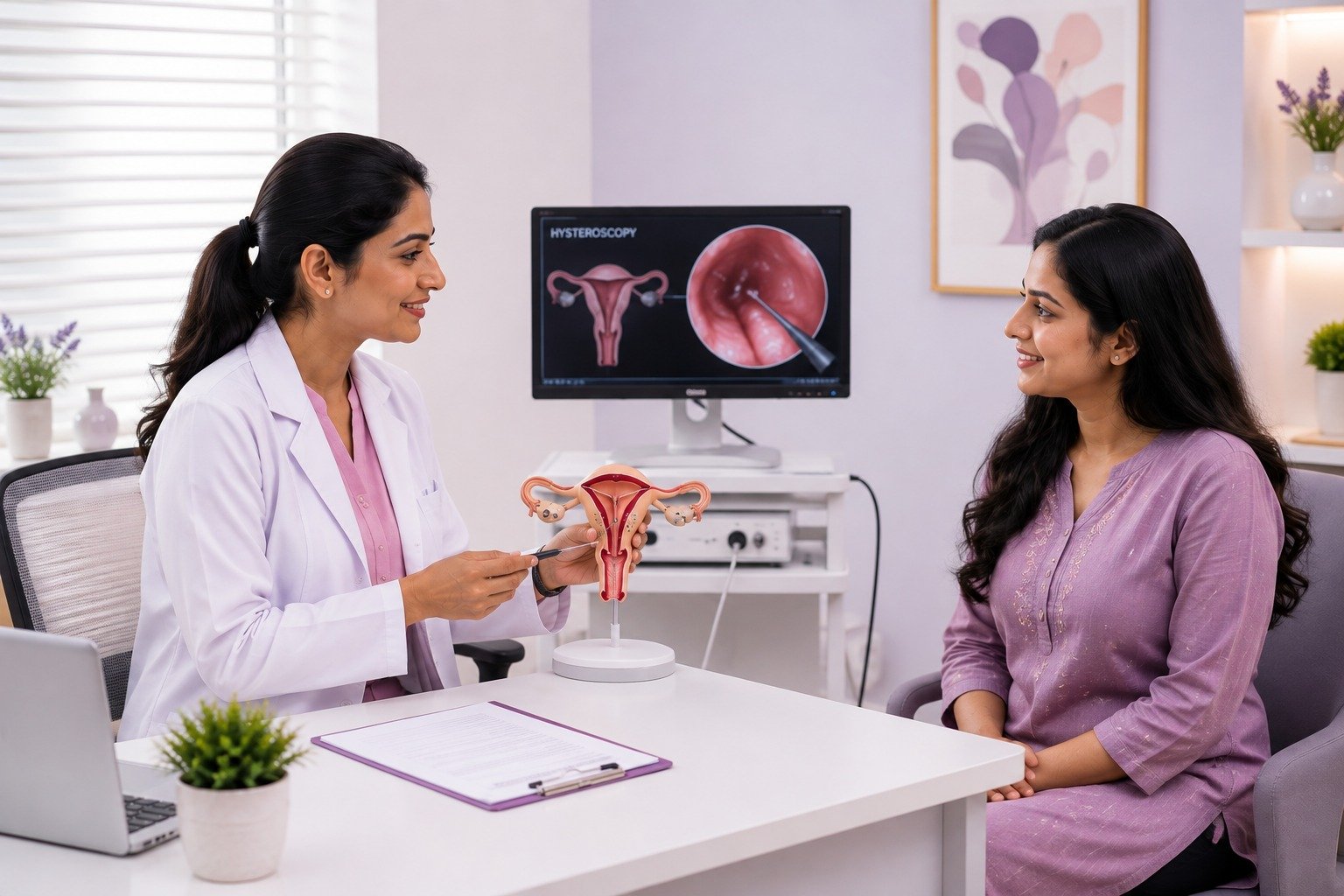
Hysteroscopy is a minimally invasive gynaecological procedure that allows a doctor to directly view the inside of the uterus using a thin, lighted instrument called a hysteroscope.
The hysteroscope is passed through the vagina and cervix into the uterine cavity. Because the procedure does not require abdominal incisions, it is sometimes described as scarless uterine surgery.
Depending on the purpose of the procedure, hysteroscopy may be used for diagnosis, treatment, or both.
It can be used to evaluate or treat selected conditions such as:
- Endometrial polyps
- Submucosal fibroids
- Uterine adhesions
- Intrauterine scar tissue
- Abnormal uterine bleeding
- Selected uterine cavity abnormalities
- Some causes of fertility-related concerns
The appropriate procedure depends on the patient's symptoms, examination findings, imaging results, reproductive plans, and overall health.
What Is a Scarless Uterine Procedure?
A scarless uterine procedure refers to hysteroscopic treatment performed through the natural vaginal and cervical passage rather than through abdominal incisions.
During hysteroscopy, the surgeon can access the uterine cavity without making external abdominal cuts.
This may make hysteroscopy an appropriate minimally invasive option for selected conditions located inside the uterine cavity.
However, not every uterine condition can be treated hysteroscopically. Conditions affecting the outer surface or deeper muscle of the uterus may require a different surgical approach.
What Is Operative Hysteroscopy?
Diagnostic and Operative Hysteroscopy
Hysteroscopy can be used for both diagnosis and treatment.
Diagnostic hysteroscopy allows the doctor to examine the uterine cavity and identify abnormalities.
Operative hysteroscopy allows the surgeon to treat selected abnormalities during the same procedure.
Depending on the condition, operative hysteroscopy may be used to:
- Remove uterine polyps
- Remove selected submucosal fibroids
- Divide intrauterine adhesions
- Treat certain uterine cavity abnormalities
- Obtain tissue samples for examination
- Address selected causes of abnormal bleeding
The exact procedure depends on what is found and the patient's individual treatment needs.
Hysteroscopic Polyp Removal
Removing Endometrial Polyps Without Abdominal Surgery
Endometrial polyps are growths that develop from the lining of the uterus.
Some polyps cause no symptoms, while others may contribute to:
- Heavy menstrual bleeding
- Irregular bleeding
- Bleeding between periods
- Postmenopausal bleeding
- Fertility-related concerns
When removal is recommended, a polyp can often be removed hysteroscopically.
The hysteroscope allows the surgeon to visualise the uterine cavity and remove the polyp under direct vision without an abdominal incision.
Hysteroscopic Fibroid Removal
Can Fibroids Be Removed Through Hysteroscopy?
Some fibroids can be removed hysteroscopically, particularly submucosal fibroids that project into the uterine cavity.
Hysteroscopic myomectomy allows the surgeon to remove suitable fibroids through the vagina and cervix.
Whether hysteroscopic removal is appropriate depends on factors such as:
- Fibroid size
- Fibroid location
- Depth of penetration into the uterine muscle
- Number of fibroids
- Uterine anatomy
- Symptoms
- Reproductive plans
Fibroids located primarily within the uterine muscle or on the outer surface of the uterus may require another surgical approach.
Hysteroscopy for Uterine Adhesions
Treatment of Intrauterine Scar Tissue
Intrauterine adhesions are bands of scar tissue that can develop inside the uterine cavity.
They may occur after certain uterine procedures, pregnancy-related events, infection, or other causes.
Depending on the extent of adhesions, hysteroscopic adhesiolysis may be used to carefully divide the scar tissue and restore the uterine cavity where feasible.
Treatment planning may take fertility and future pregnancy into consideration when relevant.
Hysteroscopy and Fertility
Can Hysteroscopy Help With Fertility Problems?
Certain abnormalities inside the uterine cavity can be associated with fertility difficulties.
Hysteroscopy may help identify or treat selected conditions such as:
- Endometrial polyps
- Submucosal fibroids
- Intrauterine adhesions
- Certain uterine cavity abnormalities
Treating an identified uterine cavity abnormality may be considered as part of an overall fertility treatment plan.
However, hysteroscopy does not guarantee pregnancy. Fertility depends on many factors, including age, ovarian reserve, fallopian tube function, sperm factors, uterine health, endometriosis, and other reproductive conditions.
Hysteroscopic Procedures for Abnormal Uterine Bleeding
Hysteroscopy for Heavy or Irregular Periods
Abnormal uterine bleeding can have several causes.
When a uterine cavity abnormality is suspected, hysteroscopy may allow direct examination of the cavity and, when appropriate, treatment during the same procedure.
Potential causes that may be identified or treated include:
- Endometrial polyps
- Submucosal fibroids
- Intrauterine adhesions
- Selected endometrial abnormalities
Your gynaecologist may recommend ultrasound or other investigations before hysteroscopy to determine the most appropriate approach.
How Is a Hysteroscopy Performed?
Hysteroscopy Procedure: Step by Step
During a hysteroscopy, the doctor generally:
- Places the patient in an appropriate position for the procedure.
- Passes a thin hysteroscope through the vagina and cervix.
- Uses a fluid to gently expand the uterine cavity and improve visibility.
- Examines the inside of the uterus.
- Identifies any abnormality.
- Performs the planned treatment when operative hysteroscopy is indicated.
- Removes tissue or specimens when required for laboratory examination.
The type of anaesthesia or sedation depends on the procedure, clinical circumstances, and individual patient factors.
Why Choose Hysteroscopy?
Potential Benefits of Hysteroscopic Procedures
When clinically appropriate, hysteroscopy may offer several potential benefits:
- No abdominal incision
- No external surgical scar
- Direct visualisation of the uterine cavity
- Treatment of selected abnormalities during the same procedure
- Minimally invasive approach
- Potentially shorter recovery than some abdominal procedures
- Uterus-preserving treatment for selected conditions
The benefits and suitability of hysteroscopy vary according to the condition being treated.
Who May Be Suitable for Hysteroscopy?
A hysteroscopic procedure may be considered for women with:
- Suspected or confirmed endometrial polyps
- Submucosal fibroids
- Abnormal uterine bleeding
- Intrauterine adhesions
- Selected fertility-related uterine abnormalities
- Abnormal findings on ultrasound or other imaging
- An indication for examination of the uterine cavity
A gynaecological evaluation is required to determine whether hysteroscopy is appropriate.
Hysteroscopy and Future Pregnancy
Is Hysteroscopy Fertility-Preserving?
Hysteroscopy can be used to treat selected abnormalities inside the uterus while preserving the uterus.
For women planning pregnancy, treatment may focus on correcting an identified uterine cavity problem while avoiding unnecessary surgery involving the uterus or surrounding reproductive organs.
However, not every fertility problem is caused by an abnormality inside the uterine cavity.
Your doctor may consider factors such as:
- Age
- Ovarian reserve
- Fallopian tube function
- Uterine anatomy
- Endometriosis
- Previous pregnancy history
- Sperm factors
- Other fertility conditions
A fertility-focused assessment can help determine whether hysteroscopy is likely to be appropriate.
Hysteroscopy vs Other Uterine Procedures
The appropriate surgical technique depends on where the problem is located.
Hysteroscopy
Used to access the inside of the uterine cavity through the vagina and cervix.
Laparoscopy
Uses small abdominal incisions to access the pelvis and can be used for conditions outside the uterine cavity.
Abdominal Surgery
May be required for larger, deeper, or more complex uterine conditions that cannot be safely treated hysteroscopically.
Your gynaecologist will recommend the approach based on the diagnosis, imaging, anatomy, symptoms, and treatment goals.
Our Hysteroscopy Treatment Process
1. Initial Consultation
Your gynaecologist discusses your symptoms, menstrual history, medical history, previous procedures, fertility plans, and treatment goals.
2. Uterine Assessment
Ultrasound or other investigations may be recommended to assess the uterus and identify possible polyps, fibroids, adhesions, or other abnormalities.
3. Treatment Planning
Your doctor explains whether diagnostic or operative hysteroscopy is appropriate and discusses available alternatives.
4. Hysteroscopic Procedure
The hysteroscope is introduced through the vagina and cervix to examine the uterine cavity. If treatment is required, the abnormal tissue may be removed or treated during the procedure.
5. Tissue Examination
When appropriate, removed tissue may be sent for laboratory or histopathological examination.
6. Recovery and Follow-Up
You receive personalised instructions regarding recovery, medication, warning signs, follow-up, and future fertility planning where relevant.
Is Hysteroscopy Safe?
Hysteroscopy is generally considered a minimally invasive procedure, but it can have potential risks.
Possible complications include:
- Bleeding
- Infection
- Uterine perforation
- Cervical injury
- Fluid-related complications
- Scar tissue formation
- Incomplete treatment
- Need for additional treatment
- Rarely, conversion to another surgical approach
The risks vary according to the procedure being performed and the patient's individual circumstances.
Your gynaecologist will explain the potential benefits, risks, alternatives, and expected recovery before the procedure.
Hysteroscopy Procedure Cost in Dwarka
The cost of a hysteroscopic procedure in Dwarka can vary depending on:
- Diagnostic or operative hysteroscopy
- Type of condition being treated
- Size and location of the abnormality
- Complexity of the procedure
- Anaesthesia or sedation
- Surgeon and hospital charges
- Laboratory or histopathology requirements
- Additional diagnostic tests
- Follow-up treatment
A personalised cost estimate can be provided after clinical assessment and treatment planning.
CTA: Book Hysteroscopic Procedure Consultation in Dwarka
Hysteroscopy Specialist in Dwarka, Delhi
If you are searching for a hysteroscopy specialist in Dwarka, Delhi, a specialist consultation can help determine whether hysteroscopy is appropriate for your symptoms or uterine condition.
Women from Dwarka Sector 6, Sector 7, Sector 10, Sector 11, Sector 12, Sector 13, Sector 14, Sector 17, Sector 19, and surrounding Delhi NCR areas can seek evaluation for abnormal uterine bleeding, uterine polyps, submucosal fibroids, intrauterine adhesions, and selected fertility-related concerns.
Treatment should be individualised according to your symptoms, imaging findings, reproductive goals, and overall health.
Personalised Hysteroscopic and Uterine Care
Scarless Uterine Surgery
Selected conditions inside the uterus can be treated through the natural vaginal and cervical passage without abdominal incisions.
Operative Hysteroscopy
Diagnostic hysteroscopy can be combined with treatment when a uterine cavity abnormality requires intervention.
Hysteroscopic Fibroid Removal
Selected submucosal fibroids can be removed hysteroscopically while preserving the uterus.
Polyp Removal
Endometrial polyps can be removed under direct visualisation when treatment is indicated.
Fertility-Focused Treatment
When appropriate, uterine cavity treatment can be planned with future pregnancy goals in mind.
Minimally Invasive Approach
Hysteroscopy provides direct access to the uterine cavity without conventional abdominal surgery.
Conditions We Treat
What to Expect
What is hysteroscopy and how is it performed?
Hysteroscopy is a minimally invasive procedure used to examine the inside of the uterus. A thin, lighted instrument called a hysteroscope is passed through the vagina and cervix into the uterine cavity. If an abnormality is found, treatment may sometimes be performed during the same procedure.
What conditions can be treated with hysteroscopy?
Depending on the circumstances, hysteroscopy can be used to treat selected endometrial polyps, submucosal fibroids, intrauterine adhesions, and other abnormalities inside the uterine cavity.
Can hysteroscopy help with fertility?
Hysteroscopy may identify or treat selected uterine cavity abnormalities that can be associated with fertility difficulties. However, it does not guarantee pregnancy and is not a treatment for every cause of infertility.
Can uterine adhesions be treated with hysteroscopy?
Yes. Selected intrauterine adhesions can be divided hysteroscopically. The extent of treatment depends on the severity and location of the scar tissue.
How do I book a hysteroscopy consultation in Dwarka?
You can book a consultation with a gynaecologist to discuss abnormal bleeding, suspected polyps or fibroids, intrauterine adhesions, fertility-related concerns, or abnormal imaging findings. Your doctor can determine whether diagnostic or operative hysteroscopy is appropriate.